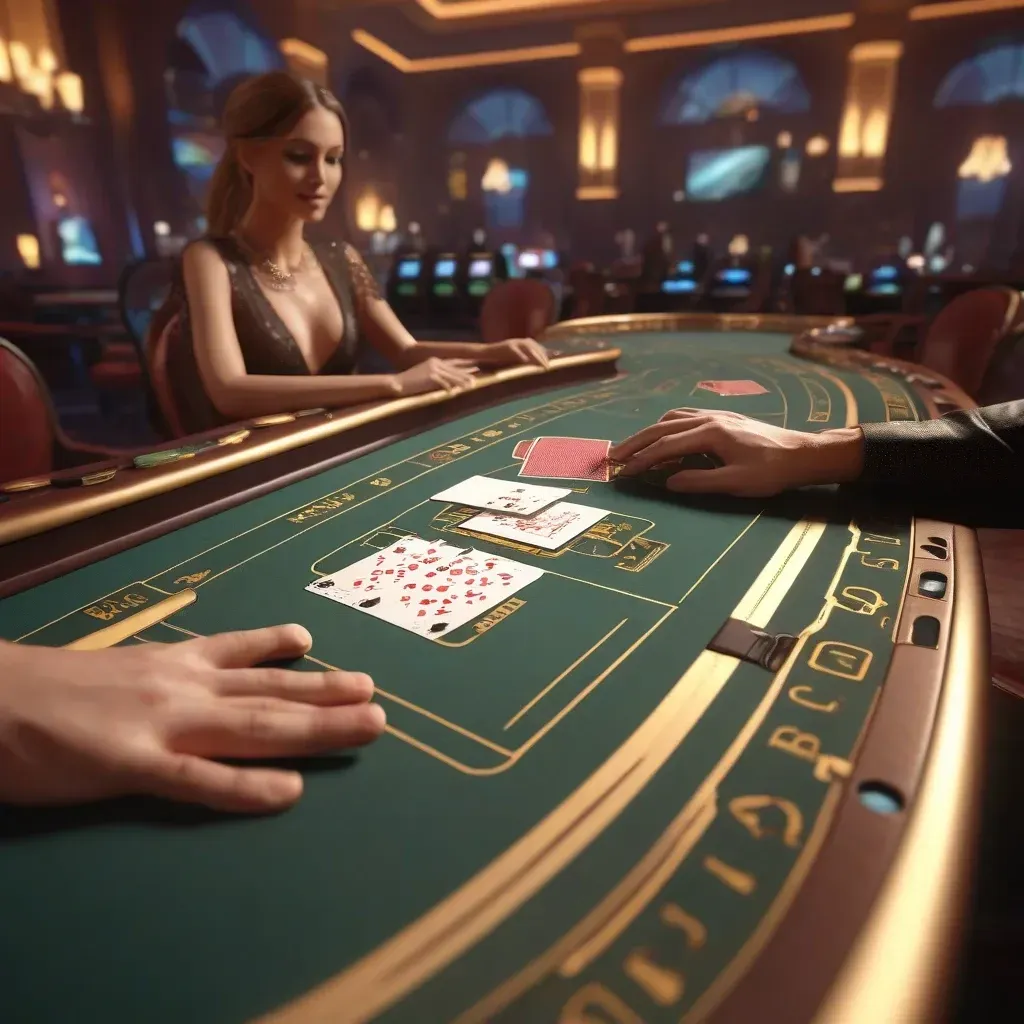
The Core Appeal: Why Players Are Flocking to Real-Time Games
Look, let’s be brutally honest here for a second. Traditional online slots? They’re kind of a black box. You click spin, a digital wheel whirs to life with flashy lights, and the software spits out a result. You’re basically handing your money to a silent algorithm and hoping for the best. It works, sure, but there’s a nagging feeling, a little whisper in the back of your head asking, “Is this rigged?” That’s the core problem old-school RNG games have. They rely entirely on trust in a piece of invisible code. Players are more savvy now; they want to see the gears turning. They want proof, not promises.
This is why the shift toward real-time games feels less like a trend and more like a revolution. It scratches an itch that standard graphics can never reach: the craving for psychological safety. When you watch a real dealer shuffle a real deck of cards or spin a physical roulette wheel, you know—you intrinsicallyknow*—that no computer is cheating you. It’s the visceral difference between watching a movie of a car chase and actually being in the passenger seat. One is entertainment; the other is raw, unscripted experience. This authenticity in gambling is the new currency. Players are flocking to live dealer games not because of better bonus rounds, but because of a deep-seated need for transparency. It’s a return to the floor of Monte Carlo, broadcast directly to your couch, stripping away the digital smoke and mirrors.
So, why play live dealer? Because it validates your participation. You aren’t just a data point interacting with a server; you are witnessing physics and human action. The trust in online casinos is rebuilt, brick by brick, with every visible card flip. This isn’t just about better graphics; it’s about dismantling the skepticism that plagues the industry. The live casino experience turns gambling from a passive digital transaction into an active, witnessed event. It provides a grounding reality that pixels simply cannot fake.
Transparency: Watching the Action Unfold in Real-Time
Let’s talk about the engine room: OCR technology. You might not see it, but it’s the silent hero holding it all together. Optical Character Recognition is the bridge between the physical felt and your digital screen. It scans the real cards dealt, the real ball landing in the slot, and instantly translates that physical action into data. This isn’t a pre-recorded loop; it’s happeningright now*. This transparency—the ability to watch the action unfold in real-time without a single millisecond of faked data—is the absolute bedrock upon which the entire concept stands. It removes the “black box” problem entirely. When you can see the dealer fumble a chip or scan the exact card that lands, the element of “rigging” becomes a logistical impossibility. For the segment to grow, this real-time element is non-negotiable. It is the line in the sand between a high-quality experience and a cheap carnival game.
The Social Connection: Chat, Community, and the Human Element
And then, there’s the chat. This is the feature that separates live platforms from the cold, lonely abyss of standard digital slots. Let’s be real—most online table games are a solitary grind. But here? You have a human dealer. Not just a croupier, but a host. An entertainer. They laugh at bad beats, celebrate your wins, and sometimes call you out for being too slow. This interactive gaming dynamic creates a stage. You aren’t just playing against the house; you’re performing in a tiny community. It’s a chaotic, messy, and deeply human experience that mirrors the popularity of Twitch streams. You get the shared tension of the spin, the jokes in the sidebar, the collective groan when everyone loses. That social casino vibe—the dealer interaction, the camaraderie, the pure social connection—is the key differentiator. It transforms a transaction into a conversation. And honestly, who wants to gamble in silence when you can have a little bit of theater?
The Tech Revolution: How Smartphones and 5G Flooded the Gates
Let’s be brutally honest for a second. The rise of the mobile live casino wasn’t a slow evolution; it was a sudden flood. The dam broke when smartphones finally stopped sucking. Today, a staggering 73% of all live casino play happens on mobile devices. That’s not a trend; that’s the new baseline. Ten years ago, you were stuck. A laggy stream on a 3G connection was a dealbreaker—pixels morphing, cards freezing mid-deal. It ruined the illusion. But now? We have 5G with sub-30ms latency. The delay is effectively dead. You tap, the dealer responds. It’s instantaneous. This is a classic ‘tech-enables-demand’ story. The hardware finally caught up to the fantasy. High-definition streaming doesn’t buckle under pressure anymore, and the camera tech in a standard phone now rivals old broadcast gear. The server doesn’t choke. The user doesn’t rage quit. The technology didn’t just invite people in; it smashed the gate down.
From Desktop to Pocket: The Accessibility Boom
This isn’t just about raw network speed; it’s about friction. Or rather, the lack of it. The shift from desktop to pocket removed every single excuse. There’s no longer a need to plan a trip to a casino, no dress code to stress over, and absolutely zero logistics headaches. It’s a tap on a screen. Players who love the intense social atmosphere of a real table but absolutely despise the commute, the parking, and the smoke are the core audience here. Mobile accessibility means the game follows you. You can be on a lunch break, waiting for a bus, or sprawled on your couch in sweatpants. It’s convenience that feels almost rebellious. The madness of responsive design means the interface collapses perfectly into your palm, making the whole experience feel less like a website and more like an app you actually want to use.
The Evolution of the Live Studio: Casino Floors & TV Sets
Look at how the background changed. We went from a single, sterile table in a random room to full-blown production sets. Golden Nugget was the pioneer here, launching the first US live dealer studio. They basically proved you could run a casino from a TV studio. But now we have two distinct flavors. You have the polished studio—perfect lighting, sharp HD streaming, green screens, and a vibe that feels like a game show. Clean, safe, curated. Then you have the raw, chaotic casino floor setups. Real noise, real chips clacking, real people walking behind the dealer. It’s an overlooked opportunity for operators to differentiate themselves. Do you want the hyper-real, controlled fantasy? Or the gritty, authentic chaos of a real casino floor? Both work, but the tech lets you choose your poison. The production quality is so high now that the line between “watching” and “playing” has completely blurred.
The Live Game Show Phenomenon: A New Category of Entertainment
Let’s be real—traditional casino tables can feel a bit stiff. Too many rules, too much focus, and frankly, they can scare off the casual crowd. But then something chaotic and brilliant happened: live game shows crashed the party. This isn’t your grandma’s bingo night. Titles like ‘Dream Catcher’ and ‘Monopoly Live’ have ripped up the old playbook, blending high-energy TV production with the mechanics of a casino floor. It’s a weird, wonderful hybrid that’s exploding faster than anyone predicted.
The secret sauce? These interactive entertainment experiences are built for a broader demographic. You don’t need to know the difference between a “hard” and “soft” hand to jump in. The stakes feel lower, the vibe is pure fun, and the whole thing moves at a breakneck pace. It’s less about strategic card counting and more about watching a giant wheel spin while a host screams into a microphone. This is the game show casino effect. Suddenly, your aunt and your college buddy can both get in on the action without feeling like they’re in over their heads.
But the real draw? The host. This isn’t just a dealer pushing cards. You need a charismatic host with serious stage presence, someone who can crack jokes, build suspense, and keep the energy up even when the round is a dud. They’re part ringleader, part comedian, and part hype man. That personality turns a simple spin into a spectacle. The TV style production value matters too—flashy graphics, catchy soundtracks, and that “live audience” feel make it addictive. It’s raw, it’s messy, and it works. That’s the live game show appeal: less intimidation, more chaos.
The Future of Live: Where Tech Meets Human (and Why It Can’t Go Too Far)
Look, nobody denies the flash. AI is scanning tables, AR is overlaying digital confetti onto your screen, and folks are talking about dealer avatars like they’re the next big thing. It’s exciting, sure. But here’s the overlooked opportunity everyone seems to be fumbling: if you strip away the soul for the sake of a shiny new gimmick, you kill the format. The core appeal of live gaming has always been the messy, unpredictable human element—the sticky tension, the subtle dealer tell, the laugh at a bad beat. That’s the product. The technology? That’s just the packaging. The future isn’t about replacing the dealer with a fully AI avatar; that’s a shortcut to a dead end. The real win is a balanced approach where machines handle the grunt work (think card recognition) and humans handle the connection. The industry’s next generation won’t be defined by how many gadgets they cram in, but by how much authenticity they manage to keep. Tech is a tool, not the star.
AI: The Silent Backend Helper, Not the Star
Let’s kill the confusion right now: there’s backend AI and there’s frontend AI. One is a blessing; the other, a potential curse. Backend AI is your invisible guardian—think fraud detection algorithms catching suspicious betting patterns or automated card recognition that speeds up the game. That’s the good stuff. It’s operational, it’s efficient, and it makes the human experience smoother without anyone knowing it’s there. But when you try to shove AI to the front, replacing the dealer with a cold avatar, you’re swapping warmth for an algorithm. Smart operators know the difference. They use AI to enhance, not replace. Let the machine handle the math; leave the charm to the person holding the cards.
AR/VR: The Next Frontier for Immersion
Okay, let’s be real for a second. VR headsets and AR overlays? They’re coming, but they’re not here yet. Not in the way the hype machine wants you to believe. The tech is clunky, the adoption is slow, and most players are still perfectly happy with a flat screen. But that doesn’t mean you ignore it. The key is to start experimenting now—dip your toes in, test low-fidelity AR overlays for stats or virtual chip stacks, maybe a limited VR lobby for the early adopters. Don’t bet the house. This isn’t about being the trendsetter who goes bankrupt; it’s about being the one who’s ready when the hardware actually works. Be realistic. Give it a timeline of three to five years before it’s mainstream. The future is immersive, but patience is the real virtue here.